Building empathy through VR
Cenizas was a virtual reality experience developed at U-tad that explored the consequences of war from the perspective of a child.
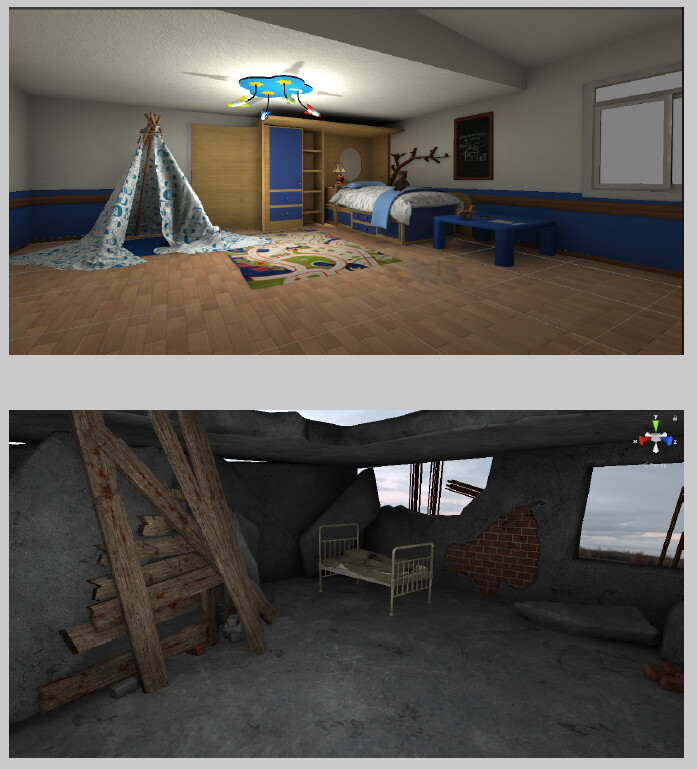
The project follows Malou, a Syrian child who has been adopted by a Spanish family. As he explores his new room, interactions with everyday objects trigger memories connected to experiences he lived through during the war in Syria.
The goal was to use virtual reality and environmental storytelling to approach the civilian consequences of conflict from a more personal perspective.
My role: Art Supervisor and 3D Artist
I worked on Cenizas as Art Supervisor and 3D Artist, combining supervision of the visual production with hands-on work on the 3D content.
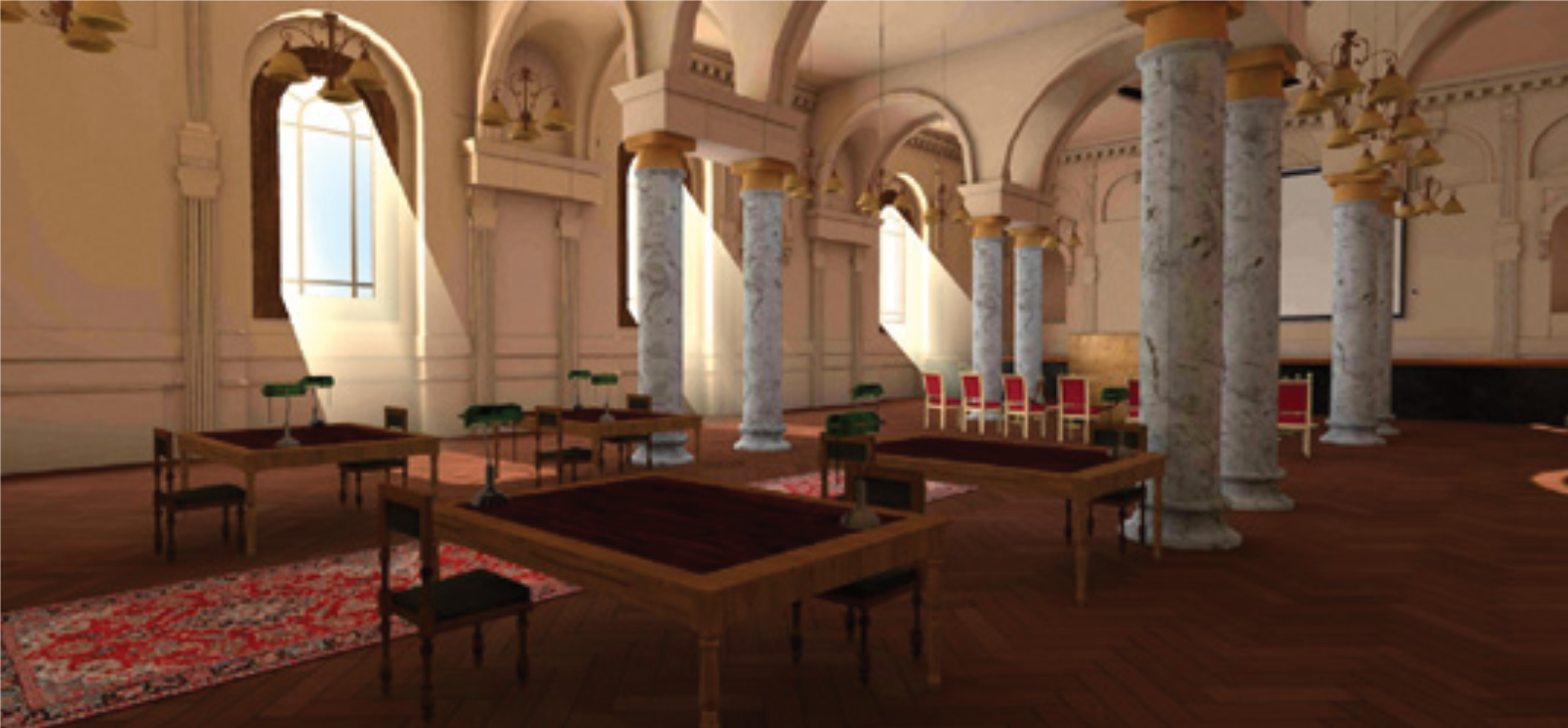
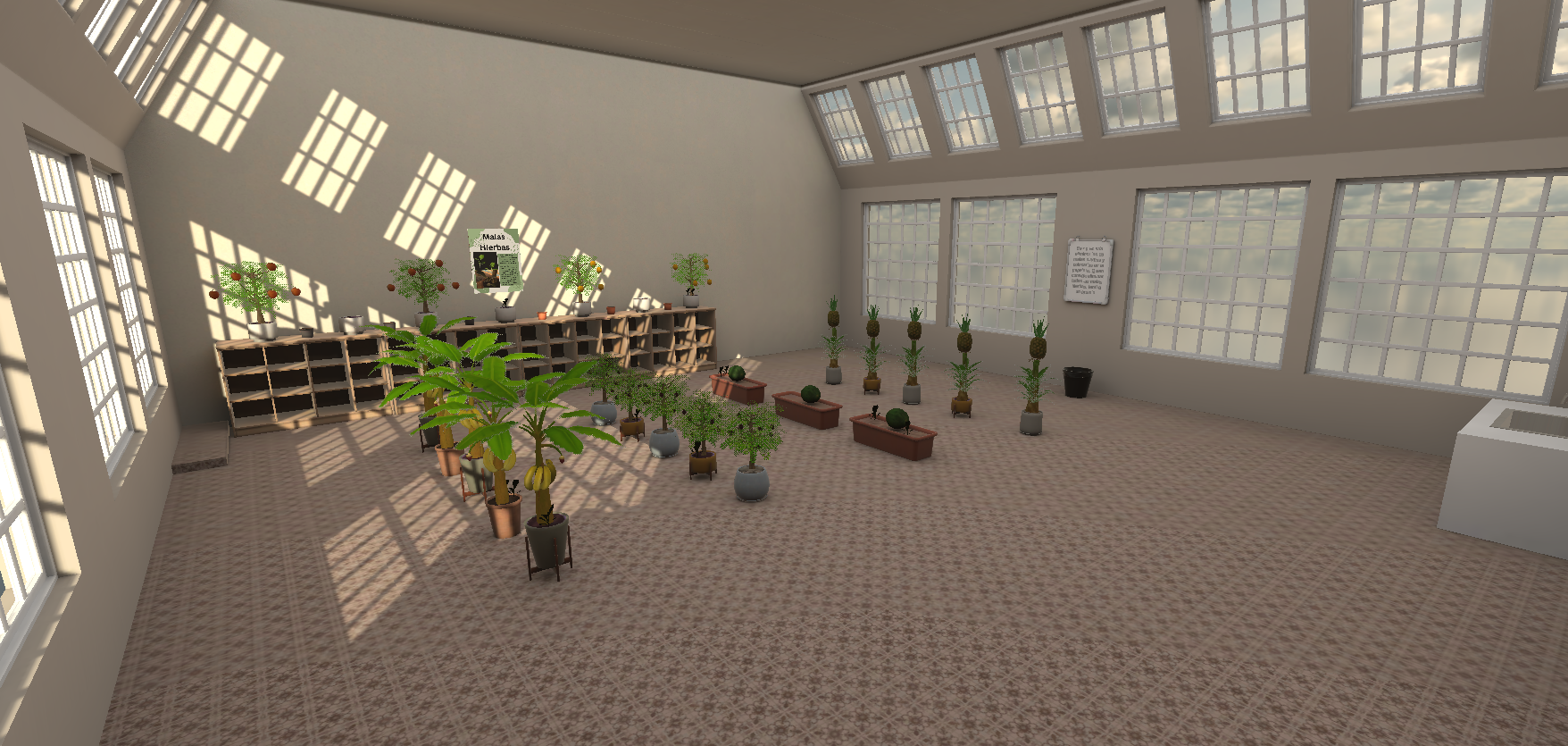
The environments were created collaboratively by Animation students from U-tad. They researched the setting and produced the 3D environments and assets that formed the visual foundation of the experience.
My responsibility was to help guide that work from the art side and prepare it for use inside a real-time VR experience. I focused especially on 3D optimization, preparing the students' models for the target hardware, and assembling the environments into the final experience.
I worked hands-on with the assets using 3ds Max and Maya, combining the practical responsibilities of a 3D artist with the broader role of Art Supervisor.
What Cenizas was building
Cenizas was built around the contrast between Malou's present and his memories. He arrives in a new home and enters what should be a safe and welcoming bedroom, but ordinary objects around him can connect back to traumatic experiences from the conflict he escaped.
Instead of treating war as a distant background event, the experience used a child's memories and surroundings to show how the consequences of conflict can continue after leaving the physical environment where they occurred.
Using the environment to tell the story
The environment had an important narrative role in Cenizas. Objects were not simply decorative elements: they helped connect Malou's new life with memories of the past.
This meant that the composition of the environment, the placement of objects, and the transition between different moments all had to support the narrative of the experience.
For the art team, the challenge was therefore not only to create believable spaces, but to make sure those spaces supported the emotional and narrative purpose of the project.
Working with student-created environments
A large part of the 3D environment was created by Animation students at U-tad. They carried out visual research and translated that research into environments, props, and architectural elements for the experience.
Their work established the visual foundation of Cenizas. As Art Supervisor, my role was to help bring the different contributions together and make sure they could function as part of the same real-time VR experience.
This required balancing the individual work of several artists with the visual and technical requirements of the final project.
Optimizing the 3D artwork for VR
Once the environment assets were produced, I worked directly with the 3D content to prepare it for VR.
My work included reviewing the geometry, optimizing models, simplifying assets where necessary, and preparing the artwork so that the environments could perform efficiently on the target hardware while preserving the students' original visual work.
This was an important part of the production because the environments had been created by several artists and needed to work together within the same technical constraints.
I used 3ds Max and Maya during this process, moving between art supervision and hands-on optimization depending on what each asset or scene required.
Assembling the experience
Beyond optimizing individual assets, I was also responsible for assembling the visual experience.
This meant bringing the optimized environments and assets together, reviewing how the different elements worked as a complete scene, and making adjustments where necessary to maintain visual continuity and performance.
Because Cenizas relied heavily on environmental storytelling, assembling the scenes was not only a technical task. The position and presentation of the environment elements also had to support the narrative and the progression of the experience.
Designing for mobile VR
Cenizas was demonstrated using Samsung Gear VR, which made performance an important consideration throughout the art pipeline.
The environments needed to communicate the visual and narrative intentions of the artists while remaining suitable for mobile VR hardware.
This was where my hands-on 3D work and my role as Art Supervisor overlapped most directly: finding ways to preserve the quality and intention of the students' artwork while preparing it to work efficiently inside the final experience.
Working with a multidisciplinary team
Cenizas was developed as a collaborative project at U-tad under the direction of Laura Raya, with Jesús Mayor supervising development and students and collaborators contributing across animation, design, narrative, production, and virtual reality.
My position between the artists and the real-time production gave me responsibility for helping translate the visual work created by the Animation students into assets and environments that could be used effectively in VR.
The project was a valuable exercise in collaborative production: rather than creating every asset myself, I had to understand the work produced by different artists, preserve what made it successful, identify technical problems, and help bring everything together into a consistent final experience.
From production to public VR experience
Cenizas was developed during the 2016–2017 period at U-tad and was later presented publicly as part of the university's virtual reality activities.
In 2017, visitors at U-tad's EsRealidadVirtual event were able to experience Cenizas using Samsung Gear VR.
For me, the project further developed the relationship between art supervision, 3D optimization, environment assembly, and real-time VR production that became an important part of my work on immersive projects.
More about Cenizas
You can find more information about Cenizas, its concept, and the wider U-tad research work here: