Developing VR environments for ADHD research
Dharana was a research project developed at U-tad through CIGNVS LAB, exploring how virtual reality and artificial intelligence could support the assessment and therapeutic process of people with Attention Deficit Hyperactivity Disorder (ADHD).
The project used simulated virtual environments to create controlled situations where users could interact with different tasks while the system and research team gathered information about their behavior.
I contributed to Dharana through CIGNVS LAB, U-tad's research group focused on computer graphics, extended realities, immersive visualization, and virtual simulation.
My role: 3D Artist / Art Production
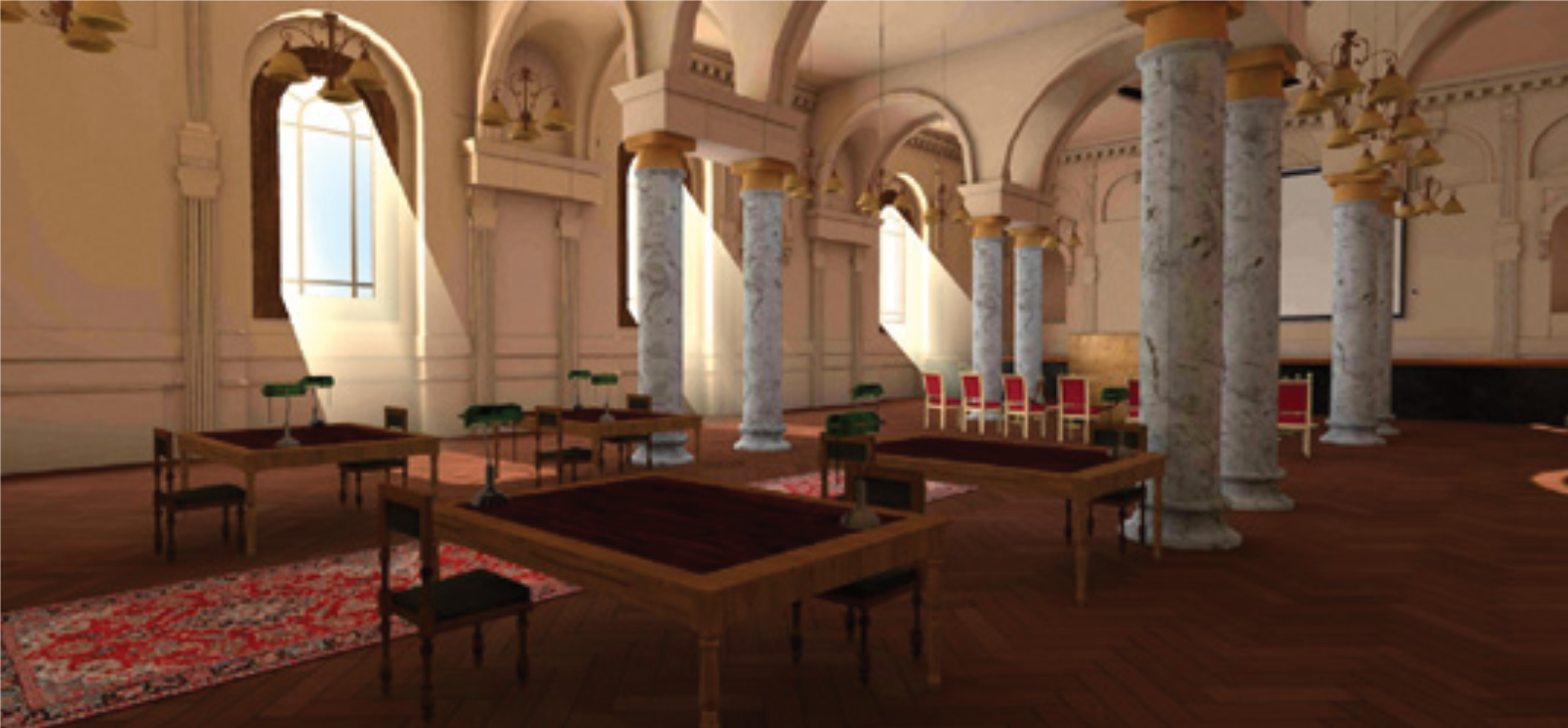
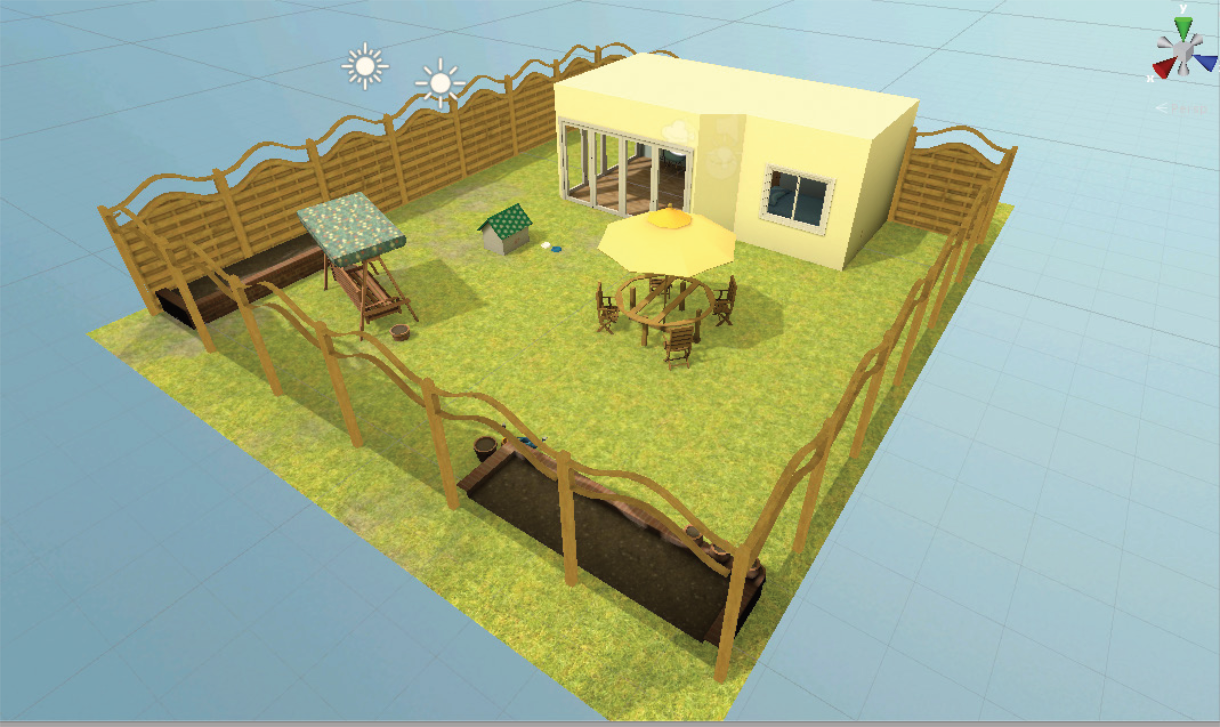
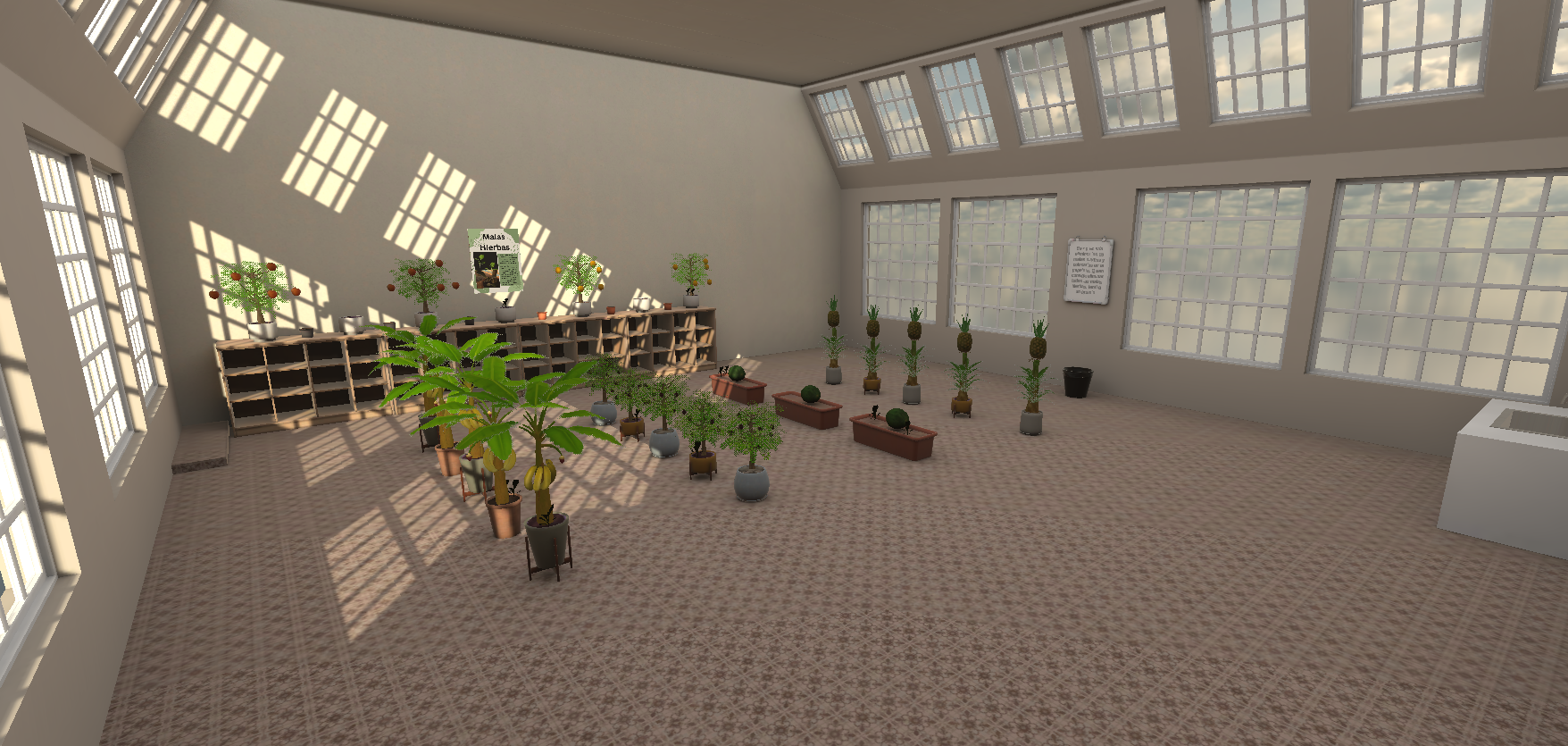
I was responsible for the 3D production used in Dharana, working hands-on on the environments and assets required for the virtual reality experience.
My work focused on translating the visual and research requirements of the project into functional real-time 3D content. This included creating, preparing, optimizing, and integrating assets and environments so they could work consistently inside the VR application.
Because Dharana was a multidisciplinary research project, the 3D work needed to respond not only to visual requirements, but also to the needs of development, interaction, data collection, and the clinical research behind the experience.
What Dharana was building
Dharana explored how immersive technology and artificial intelligence could complement the assessment and therapy of ADHD.
Instead of using VR only as a visual experience, the project placed users inside simulated environments where they could perform tasks and interact with their surroundings while information about their behavior could be evaluated.
This created a different challenge for the 3D production. The environments needed to feel believable and understandable while remaining controlled enough to support the research objectives of the application.
Creating controlled virtual environments
The environments in Dharana were not designed simply as decorative spaces. Their layout, objects, visual hierarchy, and overall readability formed part of how users experienced the different situations presented by the application.
This meant that visual decisions needed to support clear interaction. Objects had to be recognizable, environments needed to remain easy to understand in VR, and the amount of visual information had to be carefully considered.
My responsibility on the 3D side was to turn those requirements into environments and assets that could function reliably inside the final experience.
Hands-on 3D production
I worked directly on the creation and preparation of the 3D content used throughout Dharana.
My work covered the production of environment elements and props, preparing assets for real-time use, maintaining consistency between different parts of the experience, and making sure the final content could be integrated correctly into the VR application.
Being responsible for the project's 3D production meant considering both the visual quality of the assets and the practical requirements of a real-time research application.
Preparing the artwork for real-time VR
Performance was an important part of the 3D production process.
The environments and assets needed to remain visually clear while being appropriate for real-time VR. This required considering geometry, materials, scene complexity, and how the different elements would behave once integrated into the complete application.
The objective was to maintain a consistent visual result without losing sight of the technical constraints of the platform and the requirements of the research experience.
Building environments for measurable interaction
One of the most interesting aspects of Dharana was that the virtual environments were part of a broader research process.
The position of objects, the structure of the spaces, and the interactions available to the user could influence how tasks were performed and how the experience was evaluated.
This meant the 3D production needed a level of consistency that is not always required in a conventional entertainment project. Visual decisions could not be considered only from an aesthetic perspective; they also needed to remain compatible with the objectives of the research.
Art inside a research pipeline
Working on Dharana through CIGNVS LAB placed the 3D production inside a broader multidisciplinary research pipeline.
The environments and assets needed to work alongside virtual reality development, artificial intelligence, interaction systems, data collection, and clinical evaluation.
This required communication between disciplines. A change to an environment or asset could affect interaction, performance, or the way a task was presented to the user, so the 3D content needed to remain flexible as the project evolved.
Working with a multidisciplinary team
Dharana brought together specialists working across artificial intelligence, extended reality, art, clinical research, and development.
My contribution focused on the 3D side of that collaboration, translating the requirements of the wider team into visual content that could be tested and used directly inside the immersive application.
Working in this environment reinforced the importance of treating 3D production as part of a larger system rather than as an isolated visual task.
Testing and iteration
As a research project, Dharana evolved through development, testing, and feedback.
The environments and assets needed to support this iterative process, allowing changes to be introduced as the technical and research requirements of the application developed.
For the 3D production, this meant creating content that could be adjusted and integrated efficiently while maintaining visual consistency across different versions of the experience.
My work through CIGNVS LAB
Dharana was one of the research projects I contributed to through CIGNVS LAB, where my work involved the production of real-time 3D content for immersive applications.
For me, Dharana further developed the relationship between 3D production, real-time environments, technical constraints, and multidisciplinary research.
The project reinforced an approach that became increasingly important in my work: the success of a 3D environment is not determined only by how it looks, but also by how effectively it supports the interaction, technology, and purpose of the experience it belongs to.
More about Dharana
You can find more information about Dharana and the research developed by CIGNVS LAB here: